
Solar Panel Maintenance in Sri Lanka: Protect Your Investment and Maximise Energy Performance with Xcelen Solar
Keep your solar investment performing at its best. Discover practical panel cleaning, monitoring, and maintenance tips for Sri Lankan homes and businesses with Xcelen Solar. Copy

Mohamed Fawzan
Lead Marketing Executive
Your Solar Investment Deserves Long-Term Care
Installing solar panels is a smart step towards reducing electricity expenses and embracing sustainable energy. However, getting the most from your solar system requires more than simply installing panels and leaving them to operate.
Over time, dust, bird droppings, environmental conditions, and technical issues can affect how efficiently a solar system generates electricity. Without appropriate monitoring and maintenance, these problems may go unnoticed.
At Xcelen Solar, we understand that a successful solar investment is not only about the installation. It is about maintaining reliable performance, protecting your equipment, and supporting long-term energy savings.
Why Is Solar Panel Maintenance Important in Sri Lanka?
Sri Lanka's tropical climate provides favourable conditions for solar electricity generation, but it also presents maintenance considerations.
Dust from nearby roads, coastal salt deposits, falling leaves, bird droppings, and seasonal weather conditions can affect solar installations.
Although solar panels generally require relatively little maintenance, regular performance monitoring and appropriate inspections can help identify problems before they become more serious.
Proper maintenance can help:
Maintain efficient electricity generation.
Identify potential faults and performance issues.
Reduce avoidable system downtime.
Support electrical safety and equipment reliability.
Protect the long-term value of your solar investment.
A well-maintained solar system is better positioned to deliver dependable performance throughout its operating life.
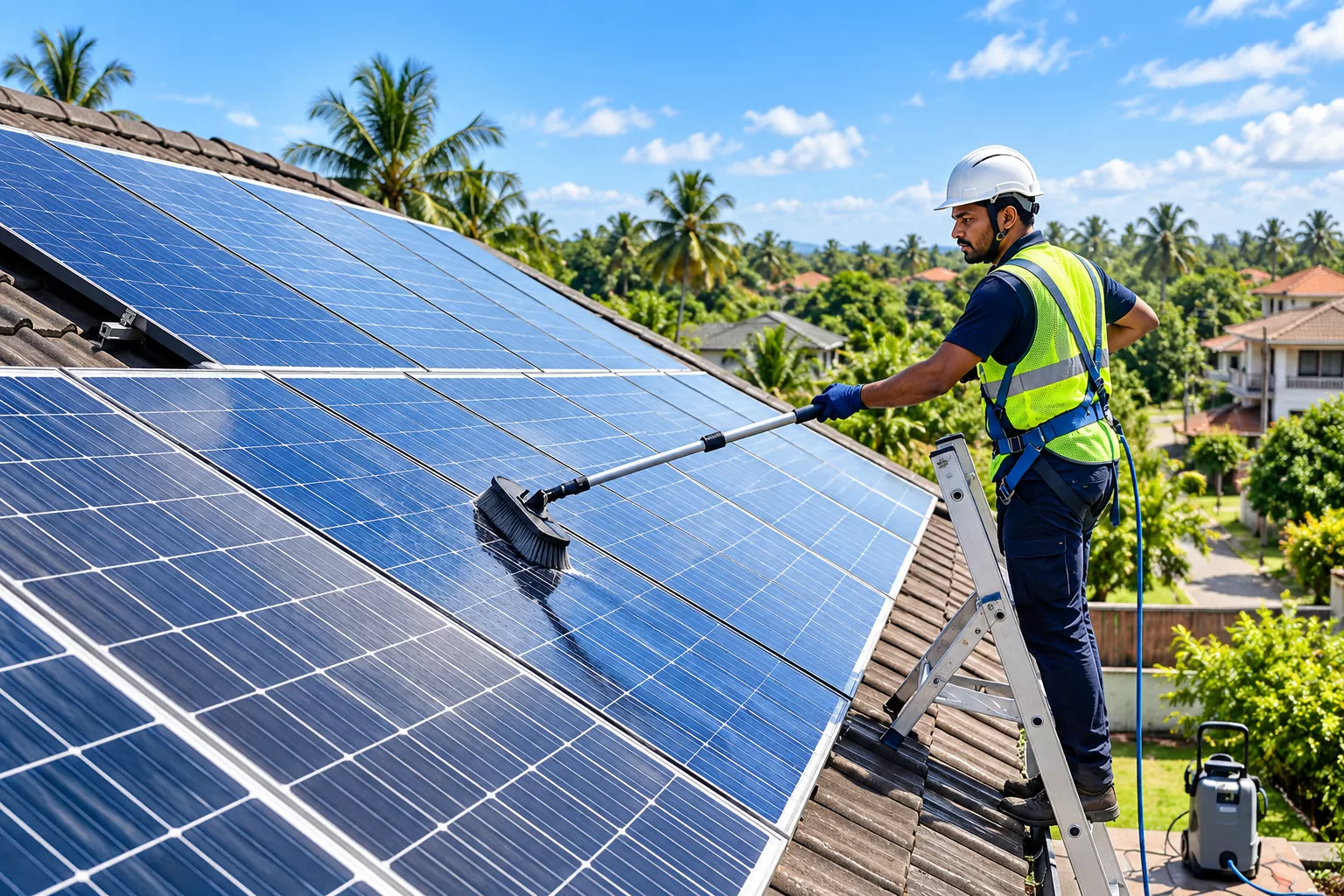
1. Keep Solar Panels Clean for Better Performance
Solar panels work by converting sunlight into electricity. When dirt, dust, or other materials accumulate on their surfaces, less sunlight may reach the solar cells.
In many locations, rainfall helps remove loose dust. However, stubborn deposits, including bird droppings and certain types of dirt, may require additional cleaning.
The best cleaning schedule depends on the installation's location, surrounding environment, panel angle, and observed performance.
Solar panels should always be cleaned using methods approved by their manufacturer. Avoid abrasive materials, harsh chemicals, and high-pressure cleaning methods that could damage the equipment.
For rooftop installations, professional cleaning is the safer option, particularly where working at height or near electrical components creates additional risks.
2. Monitor Your Solar Electricity Generation
One of the simplest ways to identify a potential solar system issue is to monitor its electricity production.
Modern solar inverters may provide monitoring functions that allow users to review generation data, system status, and error notifications.
For example, if your solar system consistently produces less electricity than expected under comparable weather conditions, further investigation may be necessary.
Performance monitoring can help identify possible issues such as excessive shading, dirty panels, inverter faults, or other technical problems.
Remember that electricity generation naturally varies with sunlight, cloud cover, temperature, and seasonal conditions. A single day of lower production does not necessarily indicate a system failure.
3. Pay Attention to Your Solar Inverter
The inverter is an essential component of a solar power system. It converts the direct current (DC) electricity generated by solar panels into alternating current (AC) electricity suitable for the connected electrical system.
An inverter problem can affect the overall performance of the installation.
Routine monitoring should include checking for unusual error messages, repeated shutdowns, or unexpected changes in generation.
The inverter should also be kept in an appropriate operating environment with sufficient ventilation, following the manufacturer's instructions.
Electrical inspection, internal cleaning, repairs, and component replacement must be carried out by qualified professionals.
4. Prevent Unnecessary Shading
Even a well-designed solar installation can experience reduced output when surrounding objects block sunlight.
As trees grow or nearby structures change, shadows may begin to cover portions of a solar array that previously received direct sunlight.
Regularly observing the surrounding environment can help identify changes that may affect electricity generation.
Any work involving tree trimming, roof access, or adjustments near electrical equipment should be carried out safely by suitably trained personnel.
Addressing avoidable shading can help your solar system make better use of available sunlight.
5. Maintain Solar Batteries and Hybrid Systems Properly
For homeowners and businesses using hybrid or off-grid solar systems, battery storage adds another important maintenance consideration.
Batteries allow compatible systems to store electricity for later use, but their performance depends on factors such as operating temperature, charging conditions, system configuration, and equipment specifications.
Modern battery systems may include integrated monitoring and protection features.
Users should follow the manufacturer's recommended operating conditions and pay attention to system warnings.
Never attempt to open, repair, or modify battery equipment without the necessary technical qualifications.
Professional assessment and appropriate maintenance help support safe and reliable operation.
6. Recognise the Warning Signs of Solar System Problems
A solar installation may require technical attention when its performance or operation changes unexpectedly.
Common warning signs include:
Repeated inverter error notifications.
Unexpectedly low electricity generation.
Visible damage to solar panels or mounting components.
Unusual noises, smells, or overheating around electrical equipment.
Water intrusion or signs of corrosion.
Unexpected system shutdowns.
If you notice any potentially dangerous electrical condition, keep away from the affected equipment and contact a qualified solar technician.
Early identification of faults may help prevent avoidable damage, downtime, and additional repair expenses.
How Often Should Solar Panels Be Maintained?
There is no single cleaning or maintenance schedule suitable for every solar installation.
A system located near a dusty road may require more frequent cleaning than one in an area where regular rainfall helps keep panels relatively clean.
Similarly, commercial and industrial installations may have different inspection and monitoring requirements from smaller residential systems.
A practical maintenance approach considers the system's operating environment, manufacturer's instructions, previous performance, and any issues identified during inspections.
Professional maintenance providers can recommend suitable inspection and cleaning arrangements based on these factors.
Share this article
Related Insights
Solar Power in Sri Lanka: A Smarter Investment for a Brighter Future with Xcelen Solar
Mohamed Fawzan