
Beyond the Monolith: Why Cloud Native ERP Is the Backbone of Scalable IT Architecture
Traditional ERP platforms often become rigid data silos that slow engineering velocity. Discover how modern, modular, cloud-native ERP architectures drive seamless data flows, automated workflows, and business scalability.

Chathura Padmal
Fullstack Developer - Intern

The Shift from Legacy ERP to Composable Architecture
For years, Enterprise Resource Planning (ERP) systems carried a reputation among developers and IT teams as cumbersome, monolithic databases with brittle integrations and high maintenance overhead. Departments routinely worked around them using spreadsheets, separate SaaS tools, and unmaintainable glue scripts.
Today, enterprise demands have evolved. Organizations require sub-second inventory synchronization, continuous financial reporting, and real-time operational insig
hts across distributed teams.
Modern ERP is no longer a single, rigid deployment. Instead, it is shifting toward composable, API-first architecture—a modular ecosystem where finance, supply chain, HR, and customer touchpoints communicate through standardized protocols.
3 Core Drivers of Modern ERP Modernization
1. Eliminating Data Fragmentation with Unified APIs
When every core business process operates in its own isolated SaaS silo, technical debt accumulates rapidly. Modern cloud ERP centralizes transactional truth while exposing robust REST and GraphQL endpoints:
Real-time visibility: Eliminates batch processing delays between sales, inventory, and procurement.
Single source of truth: Reduces reconciliation mismatches between internal databases and fi
nancial ledgers.
Developer flexibility: Enables custom customer-facing frontends (mobile apps, customer portals) to securely read and write directly to core enterprise models.
2. Event-Driven Workflows and Real-Time Automation
Static batch syncs are being replaced by event streams and automated triggers:
Order placement immediately updates warehouse allocations, triggers supply chain replenishments, and logs revenue entries.
Automated audit logs ensure every schema update and sensitive data change is tracked for regulatory compliance without slowing down end users.
3. Scalable Infrastructure and Predictable Overhead
Migrating away from heavily customized on-premise installations reduces infrastructure overhead:
Microservices and Containerization: Cloud-native deployments scale dynamically with seasonal load spikes.
Automated Patching & Security: Zero-downtime rolling deployments prevent the multi-year, multi-million-dollar upgrade cycles common in legacy platforms.
The Strategic Takeaway
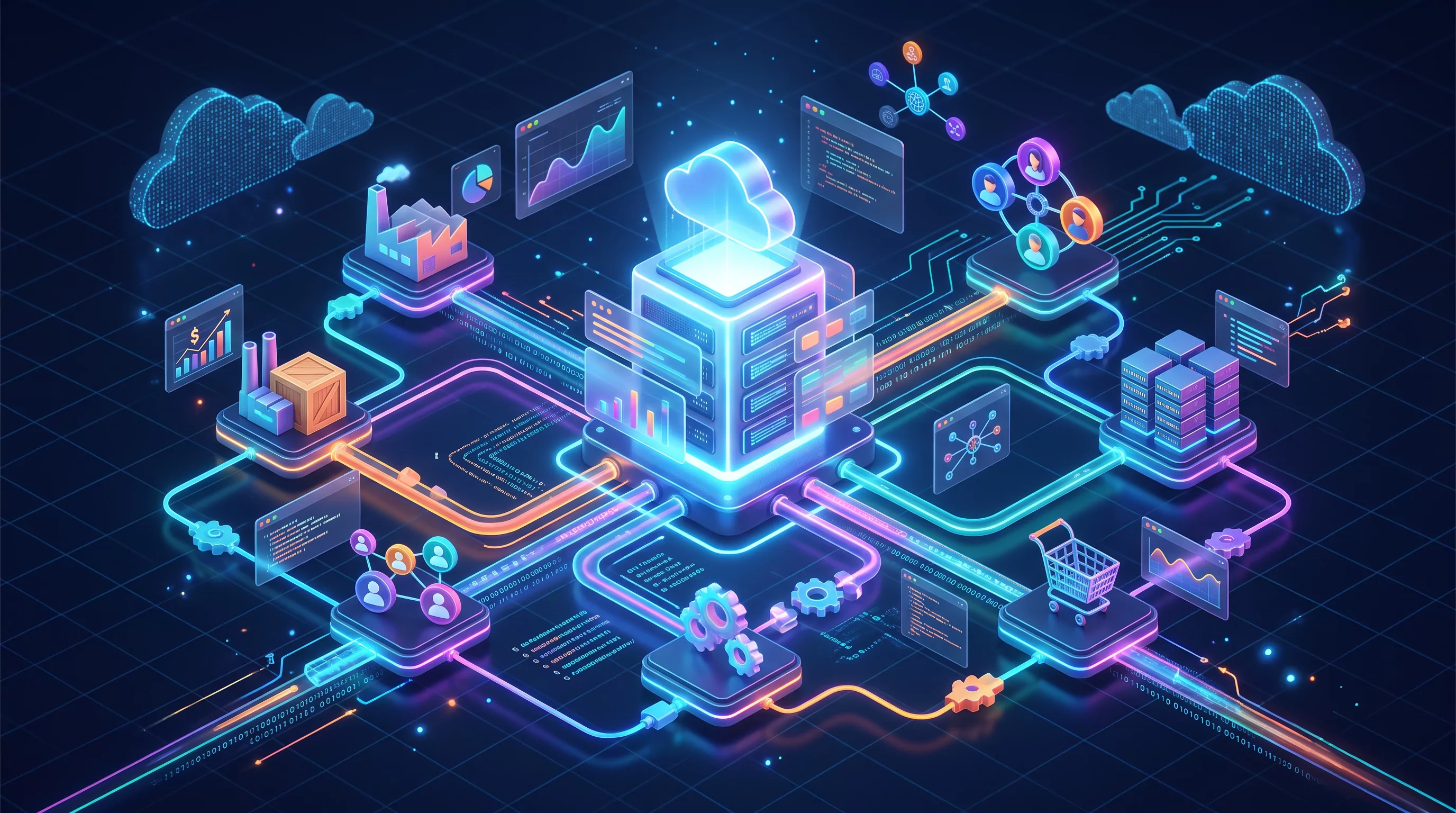
An ERP system should not be a roadblock that limits your development roadmaps or forces manual data entry across departments. By prioritizing open standards, microservices, and modern cloud design, enterprise software becomes an agile platform that actively accelerates operational growth.
Share this article